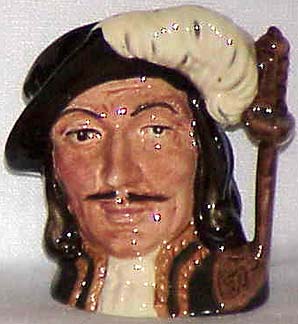
Showing posts with label Shakespeare. Show all posts
Showing posts with label Shakespeare. Show all posts
Sunday, September 12, 2010

Saturday, May 22, 2010
Esolen - Shakespeare
Anthony Esolen, translator of Dante and professor at Providence College, writes on the Bard of Avon in Desires Run Not Before Honor.
Sunday, May 2, 2010
Sonnet 73

That time of year thou mayst in me behold
When yellow leaves, or none, or few, do hang
Upon those boughs which shake against the cold,
Bare ruin'd choirs, where late the sweet birds sang.
In me thou seest the twilight of such day
As after sunset fadeth in the west,
Which by and by black night doth take away,
Death's second self, that seals up all in rest.
In me thou see'st the glowing of such fire
That on the ashes of his youth doth lie,
As the death-bed whereon it must expire
Consumed with that which it was nourish'd by.
This thou perceivest, which makes thy love more strong,
To love that well which thou must leave ere long.
- William Shakespeare
Thursday, February 18, 2010
The Bard and the 'Old Religion'
Brad Miner at The Catholic Thing takes up a topic near to my own heart; namely, the world's best and dearest closest Catholic, the Bard. If interested in more evidence, visit the sidebar category, Shakespeare.
Tuesday, December 22, 2009
Will in Italy
 Timesonline's Richard Owens reports more evidence that the Bard of Avon was indeed a faithful son of the old Church here. It is becoming, one hopes, more common knowledge.
Tuesday, March 10, 2009
Cobbe Portrait
What did the Bard of Avon really look like? Recent studies say if you want to know, look to the Cobbe oil painting.
Friday, May 30, 2008
Shakespeare Among the Ruins

 I cannot emphasize enough the work of Clare Asquith, Shadowplay, and the video by Michael Wood, In Search of Shakespeare. The former is the definitive code-breaking hermeneutic for the works of the Bard, sine qua non. The latter is, for the sheer human necessity of seeing the primary history documents, places, and, well, things of Shakespeare's life (the wedding bed of Anne and William, his family's Catholic parish, father John Shakespeare's will, the city map showing where he lived in London with the Charles Mountjoy family on 'Muggle' Street). (Take note Potter fans: Who or What might "Fawkes the Phoenix" be, pray tell? Does Rowling even know?)
Essential reading. Essential viewing. Far and away better than the The DaVinci Code tripe and piffle. You couldn't make this stuff up!
Sunday, May 25, 2008
Asquith & Pearce - Shakespeare
 There are a number of good books out now that stake a claim to the adherence of Shakespeare to the "old faith" - Catholicism - of his tumultuous times, as I mention here and here.
Having read Pearce's Quest for Shakespeare, I am sad to say it is not one of his finer books. For reasons known only to him, Pearce feels the need to fling the gauntlet in the face of opponents with an off-putting pugnacity and rudeness. I only say this because when he is in his "zone", there are few authors I enjoy reading more. I cannot explain it further.
On the other hand, there are fewer books that I have liked with more gusto from the first page than Clare Asquith's Shadowplay - The Hidden Beliefs and Coded Politics of William Shakespeare. Asquith paints the age and the players of the Regnum Cecilianum - the true power of the Elizabethan age [p. 12] - with great compassion, understanding, and power.
Thumb up - Asquith. Thumb down - Pearce. At least in terms of published work on Shakespeare. More's the pity.
Thursday, May 8, 2008
Clues to the Bard
 Just a plug for Michael Wood's PBS presentation, In Search of Shakespeare, now that Joseph Pearce's new book, Quest for Shakespeare (Ignatius) is out.
Wood in his fascinating exploration of Shakespeare in his world asks, "Is THIS (above) a picture of William Shakespeare, a twenty-something rake in London?"
Wood's In Search of Shakespeare is a fine addition to one's DVD collection.
Wednesday, May 7, 2008
Recusant Composers of Note
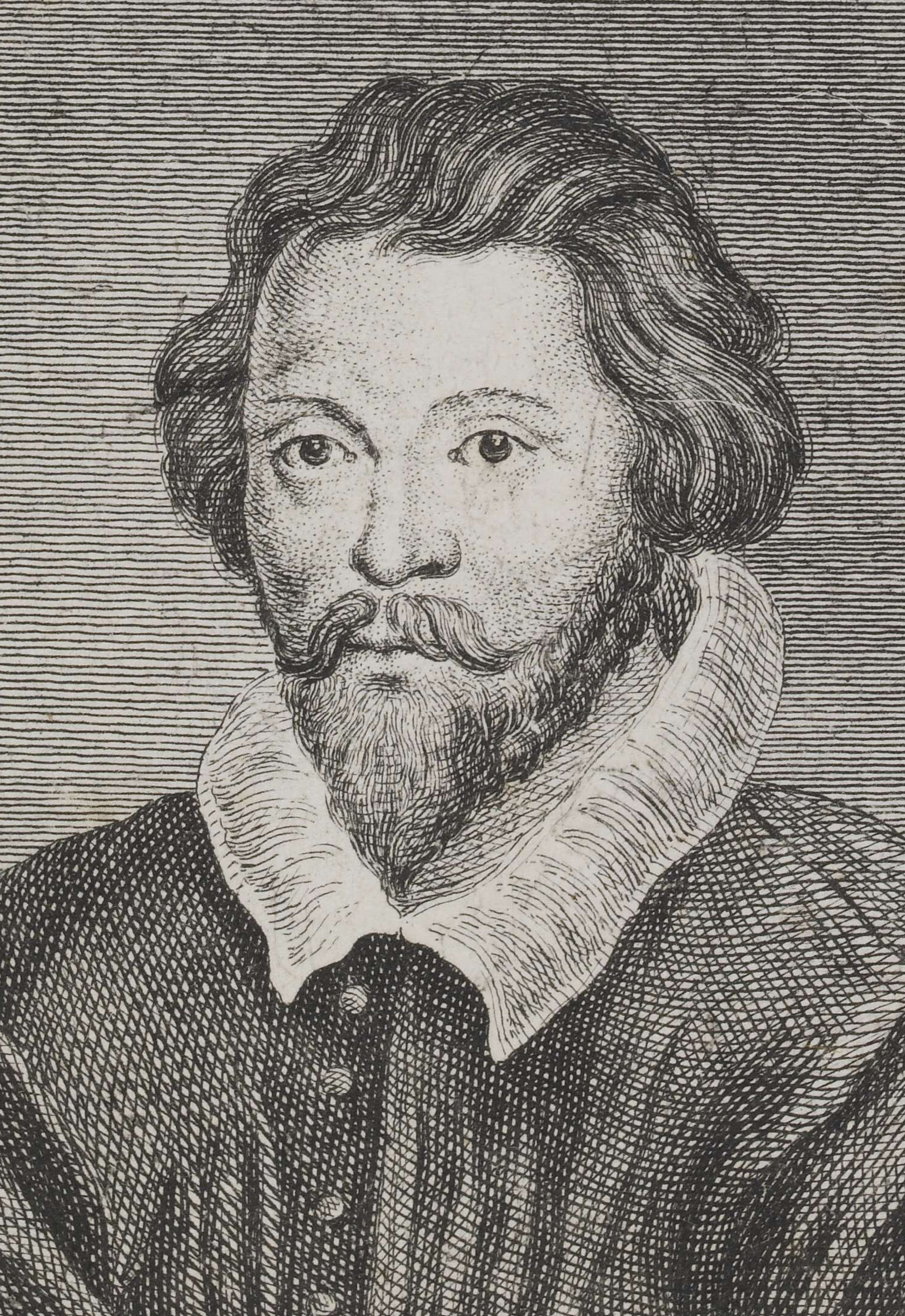 William Byrd
Many Catholics -- among whom research is including William Shakespeare as one (Shadowplay ; Shakespeare the Papist; Quest for Shakespeare) - continued to adhere to "the old religion" during this time of danger and deprivation. Some of the Catholic composers and musicians of note during this time include William Byrd (1543-1623), Thomas Tallis (1505-85), and Richard Dering (1580-1630).
Byrd and his teacher and sometime business partner, Tallis, issued Cantiones sacre in 1589, and a number of motets have texts that allude to the worsening situation of English Catholics. For example, Exsurge, Domine sets to music verses from Psalm 43:
Exsurge, quarew obdormis, Domine? Exsurge, et ne repellas me in finem,Quare faciem tuam avertis? Oblivisceris inopiae nostrae et tribulationsis nostrae? Exsurge, Domine.One of the most famous manuscripts traditionally associated with suffering Catholics of this period is the Fitzwilliam Virginal Book, a manuscript of nearly 300 secular and sacred works for keyboard instrument. The same handwriting is used throughout and traditionally the author has been thought to be Francis Tregian the Younger (1574-1619) of a distinguished Catholic family from Cornwall. Composers whose works appear in the Fitzwilliam Virginal Book were either Catholic or had Catholic connections: Byrd, Tallis, Dowland, John Bull, and Peter Philips.
Arise, O Lord: why sleepest Thou?
Arise, and reject me not for ever.
Wherefore hidest Thou Thy face and
Forgettest our misery and trouble?
Arise, O Lord!
One of the 300 English martyrs was Henry Garnet, SJ, who was implicated in the Gunpowder Plot.** A Frenchman, Charles de Ligny, recorded that he "found Garnet in company with several Jesuits and gentlemen, who were playing music: among them Mr. William Byrd, who played the organ and many other instruments. To that house came, chiefly on the solemn days observed by the Papists, many of the nobility and many ladies by coach or otherwise."
Around 1617, Richard Dering found refuge in Brussels and there became acquainted with Peter Philips (1560-1633). A wonderful recording that juxtaposes the sacred music of Philips and Dering was released by the Choir of King's College, Cambridge (EMI 7243 5 66788 2 8).
Music from the Fitzwilliam Virginal Book can be found in recordings by Joseph Payne (Vox CDX 5085) and Ton Koopman (Capriccio 10211).
The Essential Tallis Scholars CD contains works by both Tallis and Byrd.
**Hiliare Belloc (1st History, Oxford) reports the following in his fine How the Reformation Happened: "The first date assigned to the conception of the Plot is March, 1604. The first hint we have of the Government's watching and 'nursing' it is April, 1604. The pretended 'discovery' is November, 1605. So it was 'nursed' in secret by Cecil for the full eighteen months." [footnote, 244]
Wednesday, October 31, 2007
The Bard in Persecution
 A growing concern seems to be how to live faithfully, hopefully, lovingly, and, indeed, prophetically amidst the lapping, polluted waters of paganism. A supreme exemplar is the Bard himself, William Shakespeare. In the loathsome days of the reign of Lord Cecil, first William and then his son, Robert, Shakespeare remained a faithful son of the Catholic Church an increasing amount of evidence more than suggests.
A grand read is Clare Asquith's Shadowplay – The Hidden Beliefs and Coded Politics of William Shakespeare [2005], a painstaking piece of literary detective work. A brief introduction to Asquith's work is found at Godspy, Cracking Shakespeare's Catholic Code: An interview with Clare Asquith.
A highly enjoyable video on the subject is Michael Wood's In Search of Shakespeare [2003]. Wood's enthusiasm for Shakespeare's work, life, relationships, and "the old faith" are manifest in every step of his "search".
Most importantly, the detestable and boorish brutality of Elizabethan England is not hid from either the reader or the viewer in these resources. "Mary's Dowry" may have been stripped away by the greed of the "New Millionaires" (Belloc). But the Bard lived, wrote, acted, and died a son of the Catholic Church, admired by her flock and her enemies.
Update: The Times Online reports that a Vatican historian has denounced Elizabeth: The Golden Age as a “distorted anti-papal travesty” that risks dividing the West just when it should be rediscovering its “common Christian roots” in the face of Islam. P'haps old Will nudged some folk to go see the film tissue of lies and speak the truth in the face of its tinsel-town tomfoolery.
Subscribe to:
Posts (Atom)