One way to get some idea of the magnitude of a trillion is to ask: How long ago was a trillion seconds?How much is a trillion?
A trillion seconds ago, no one on this planet could read and write. Neither the Roman Empire nor the ancient Chinese dynasties had yet come into existence. None of the founders of the world's great religions today had yet been born.
That's what a trillion means. Put a dollar sign in front of it and that's what the current bailout may cost ...
Tuesday, January 13, 2009
How Much is a Trillion
Jill Fallon at Business of Life quotes Thomas Sowell:

'Beware, we are coming!'
Thanks for the heads up. I needed to order more shells anyway.
After all, this has always been the historic means of 'evangelization' for the Scimitar.
After all, this has always been the historic means of 'evangelization' for the Scimitar.
Vietnam - Devotion to Our Lady
Asia News reports that Regimes change, but Vietnamese devotion to Mary remains firm.
Hanoi (AsiaNews) - Vietnam has had to face war since the country was first founded. The population was governed for a thousand years by China, for a century by the French, and for 50 years it was divided into two parts, the south and the north. But in every age and under every regime, Vietnamese Catholics have had a special devotion to their Mother Mary.
It is the same today. "When I find myself in difficulty," says Ngoc, a high school English teacher in Ho Chi Minh City, "I always go to the image of the Virgin Mary in my parish. Also when I have problems in my family. I pray to Our Lady of Graces. The image of Mary is present in all families and parishes. Time passes quickly, but the Lady of peace is always standing in front of the Cathedral of Our Lady, or the Mother of Perpetual Help at the Redemptorists. In every town, village, and area where there are poor laborers, the people go to Mary and pray with and for each another."
One young woman, Thu, talks about her experience with her prayer group: "in my family, we pray together every evening, and also on the anniversary of the death of our relatives. We get together and recite the rosary. When I go to Mary, I feel peace in my heart, and this helps me to live and to demonstrate Christian charity in society. The Virgin has helped, sustained, and strengthened our faith in God."
In effect, the Vietnamese pray together as a family: whole towns and villages demonstrate their devotion to Mary. They pray, their songs resound, and the people of other religions get the idea that Catholics are good people, which brings their own children to the faith. Their children are not involved in drugs or crime and stealing, and they reduce the social problems in the area. The education of their families improves coexistence and development in society.
In many parishes, after the Mass, the faithful sing hymns to the Virgin before returning home. On the occasion of the month of the rosary, to honor Our Lady, in May and October, flowers are offered in the parishes, together with the recitation of the rosary and the singing of hymns. Vietnamese Catholics have eight centuries of devotion to Our Lady: with feudalism, capitalism, and socialism.
"Vietnam," a former professor in Hanoi explains to AsiaNews, "has many important remnants of devotion to Our Lady. These are closely connected to the country's history, and to every development of our Church. Mary is always present, she protects and helps the faithful, the Church, and all good-hearted people." He recalls that the Immaculate was brought in 1861 to the province of Nam Dinh, in the diocese of Bui Chu, at the time of King Tu Duc, who persecuted the Church and had many Catholics killed. In 1895, the Church of Our Lady of the Rosary was built in the province of Ninh Binh, in the diocese of Phat Diem. In 1991, John Paul II inaugurated a holy year there.
Then there is the national shrine in La Vang, in the province of Quan Tri, archdiocese of Hue. The history books and the volume on the Holy Land by La Vang say that this was also the location of the village of Co Vuu, the ancient name of an area of the parish of Dih Cat. The parish was instituted in 1777, at the time of King Canh Tinh. After this, there was the regime of Tay Son. Back then, in the province of Quango Tri (one of the poorest provinces, and the most harshly tried by war), the Catholics lived in peace and helped each other, but Nguyen Quang Toan of the regime of Tay Son had them arrested and cruelly killed. When King Tu Duc died,the movement of Can Vuong rose up in arms and became the movement Binh Tay Sat Ta, which means "they defeated the French and killed Catholics."
So the Church in Vietnam has spent a great deal of time under feudal kings and dictators of capitalism and socialism. But Our Lady is always present, she protects helps us, now as in the past. As the lunar new year approaches in Vietnam, we trust in God and in our Church. The good news has come among us. And now the major penitentiary, Cardinal Francis James Stafford, in the name of the Holy See has granted a year of plenary indulgence for all of the faithful of Vietnam who participate with devotion at the Mass and in other ceremonies for Our Lady of Perpetual Help at the parish of Thai Ha in Hanoi, from January 31 of this year to May 5, 2010, under the normal conditions of going to confession, receiving communion, and praying according to the intentions of the Holy Father.
Through this event, the Church and the faithful have unity, community, they pray, love, and help one another in the love of Jesus.
Monday, January 12, 2009
A Sad Retreat
Robert Spencer posts a video of London Scimitar representatives following (chasing?) police during a street protest.
Is it a matter of perception? The protesters clearly use graphic f-bomb language, mocking the police shouting "Allahu akbar," throwing traffic cones and sticks and taunting them, calling them cowards and "kuffar".
Do the police think they are merely clearing a path, keeping the peace? At 5:50 they whack a head or two, but then the trotting and mocking continues.
If this is what happens when the street mobs of the Scimitar meet 9-1-1 today, what will happen when the numbers of the former grow even larger? Does the Christian remnant in the ruins of the West have anything other than a depleted emergency response network, crumbling courts, and a ghostly memory of a noble Christendom?
Poor Old England II
A young secular Jew in England, Francesca Segal, writes,
Read all …
In August 2001, I turned 21 and my parents gave me a Star of David necklace. Then a month later, the world changed and my mother, with remarkable foresight, began her campaign to rescind the gift, begging me to take it off because she was frightened it would make me a target in the wake of mounting evidence that fanatical Islamism was tightening its grip on the country. My argument was always the same - when I am no longer safe being identifiably Jewish on the tube, I don't want to live in England ...
There has been a sea change in Europe and it's terrifying.
Why No Knightly Presence Here?
 Milan, Italy - January 10, 2009
Mark Steyn writes, In Toronto, anti-Israel demonstrators yell "You are the brothers of pigs!," and a protester complains to his interviewer that "Hitler didn't do a good job."To the Scimitar, if you cannot find a Jew to scapegoat, guess who is next?
In Fort Lauderdale, Palestinian supporters sneer at Jews, "You need a big oven, that's what you need!"
In Amsterdam, the crowd shouts, "Hamas, Hamas! Jews to the gas!"
Sunday, January 11, 2009
Brrr
Are we on the brink of a new Ice Age? Pravda reports it may be so. (They're also predicting the collapse of the United States soon as well.)

Dalrymple
 Theodore Dalrymple writes,
Where does the fear in modern art of such qualities as beauty and tenderness towards the world come from? (I am talking here of art that achieves public notice and notoriety: there may be hundreds or thousands of excellent artists who fear neither beauty nor tenderness, but whose work goes unremarked.)
I think it has something to do also with our inflamed egotism, that requires that we should be entirely self-sufficient and autonomous, philosophically, morally, intellectually and economically.
Beauty is a fragile and vulnerable quality, and moreover one that is difficult to achieve; ugliness, by contrast, is unbreakable and invulnerable, and very easy to achieve. (How easy it is to look bad, how difficult to look good!) By espousing the ugly, we make ourselves invulnerable too; for when we espouse the ugly, we are telling others that ‘You can’t shock, depress, intimidate, blackmail, or browbeat me.’
We use the ugly as a kind of armour-plating, to establish our complete autonomy in the world; for he who says that ‘I find this beautiful,’ or ‘This moves me deeply,’ reveals something very important about himself that makes him vulnerable to others. Do we ever feel more contempt than for someone who finds something beautiful, or is deeply moved by, what we find banal, trivial or in bad taste? Best, then, to keep silent about beauty: then no one can mock or deride us for our weakness, and our ego remains unbruised. And in the modern world, ego is all.
Read all of Beauty and the Best.
Saturday, January 10, 2009
Which Direction
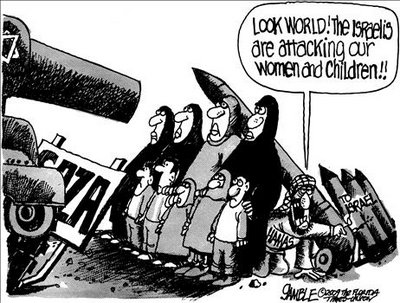
One must understand something crucial happening in current events today: to paraphrase C. S. Lewis, every person you meet is headed either toward a sacramental anthropology and rejection of sacred violence, or is headed toward the primitive sacred and its dependence on sacred violence. (Lewis said 'toward heaven or toward hell' - which may be the same thing).
The farther persons are from the influence of the Gospel, the more likely that this will begin to occur. It will seem as though such mob violence is acting like a prairie brush fire: quenched in one place, it will flare up elsewhere as though ignited by an unseen root system. This is the "dry tinder" Our Lord warned of (Jn 15,6) that is only fit for conflagration.
So, ask yourself: is this good news or bad news?
Strider at the Prancing Pony
 Aragorn's Lay
All that is gold does not glitter, Not all those who wander are lost; The old that is strong does not wither, Deep roots are not touched by the frost. From the ashes a fire shall be woken, A light from the shadows shall spring; Renewed shall be blade that was broken, The crownless again shall be king.
'Beauty Is Making a Comeback'
 John Murphy at Godspy writes on the indelible necessity of beauty (along with truth and goodness, of course):
The fact of Original Sin makes ignoring humanity’s fallen state impossible for the artist, which is why the Christian mode of beauty can have a sublime terror or despair, as in Michelangelo’s Last Judgment or Górecki’s Symphony of Sorrowful Songs. With reference to the unblinking naturalism of O’Connor’s prose, the Archbishop of Canterbury wrote, “The tightrope that the Catholic writer must walk is to forget or ignore nothing of the visually, morally, humanly sordid world, making nothing easy for the reader, while doing so in the name of a radical conviction that depends on that world being interrupted and transfigured by revelation.” Thus, Christian faith does not limit but rather expands an artist’s sensibility for the simple reason that Christianity is all-inclusive of joy and suffering, hope and despair, sin and redemption. As JRR Tolkien put it, “there is no story without the fall.”
By becoming “subcreators” with God of authentically beautiful art that is both of its time and suffused with perennial truth, artists can participate in a new kind of evangelization. In the words of Image journal editor Gregory Wolfe, “Beauty is making a comeback.” (His own journal testifies to this). Ron Hansen’s slim, haunting novel, Mariette in Ecstasy, published in 1992, belongs on a shortlist of the great Catholic novels. Another recent example was the remarkable success of The Passion of the Christ, with its Caravaggio-inspired visual scheme. More telling, perhaps, is the spate of secular art that taps into the deep vein of Christian philosophy—the bruising beauty and life-affirming message of Alfonso Cuarón’s Children of Men, the sophisticated albums of singer-songwriter Sufjan Stevens, the near-biblical pitch of Cormac McCarthy’s prose, or the Christ-infused finale of the Harry Potter series. The experience of great art, whether religious or secular, nearly always has a spiritual dimension—an interstice in daily life where the luminous eternal breaks through.
The luminous eternal is truth, goodness, and beauty. Of the three, beauty may be the best proselytizing force because we respond to it willingly, happily. Whether the object of our attention is a striking painting, a lyrical prose passage, or a glorious piece of music, humans are hardwired to delight in beautiful things. To adopt Oscar Wilde’s formula, Beauty is higher than Genius because it needs no explanation. It simply is. That is why modern art relies so much on theory.
Beauty is not just icing on the cake; beauty is substantial, essential. In his introduction to the Glory of the Lord, the great theologian Hans Urs von Balthasar addressed the mystery of beauty and its utter necessity. I leave him with the final, eloquent word:
“Beauty is the disinterested one, without which the ancient world refused to understand itself, a word which both imperceptibly and yet unmistakably has bid farewell to our new world, a world of interests, leaving it to its own avarice and sadness. No longer loved or fostered by religion, beauty is lifted from its face as a mask, and its absence exposes features on that face which threaten to become incomprehensible to man. We no longer dare to believe in beauty and we make of it a mere appearance in order the more easily to dispose of it. Our situation today shows that beauty demands for itself at least as much courage and decision as do truth and goodness, and she will not allow herself to be separated and banned from her two sisters without taking them along with herself in an act of mysterious vengeance. We can be sure that whoever sneers at her name as if she were the ornament of a bourgeois past – whether he admits it or not – can no longer pray and soon will no longer be able to love.”
Friday, January 9, 2009
Worth a Thousand Words
Robert Spencer posts a video made by an Arab Christian that tells more than one will ever learn from a news report by the MSM: Who is Hamas?
Subscribe to:
Posts (Atom)