Never before in the history of the world was there so much knowledge; and never before so little coming to the knowledge of the Truth. Never before so much straining for life; never before so many unhappy lives. Never before so much science; never before was it used so for the destruction of human life.
Wednesday, December 9, 2009
Sheen - A Life
For the record: George Marlin discusses the life and vocation of Archbishop Fulton Sheen who died thirty years ago today here. A quote of Sheen that he expressed in 1933:

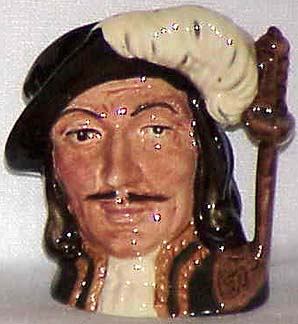
A 20th-Century Knight for Truth
 What does a modern-day knight look like? Margaret Datiles makes the case for the knight errantry of Dietrich von Hildebrand at Headlinebistro.
He was chased by Nazis. He was a philosopher before his time. His revolutionary thoughts on the nature of marriage and sexuality left a lasting mark on modern Church teachings. One day, he might be a Doctor of the Church.
Who is this unsung hero? His name is Dietrich von Hildebrand.
Sometimes referred to as a “Knight for Truth,” von Hildebrand stands out as a much-needed voice of Catholic faith, reason and courage in today’s over-sexualized, relativistic world.
With the recent passage of laws re-defining marriage and consideration of health care “reforms” that may unleash a policy of abortion-on-demand throughout the nation, von Hildebrand’s writings are a beacon of light to all who strive to stay true to Christian principles. He is a breath of fresh air amidst the cloud of moral subjectivity that chokes our legal system, culture and society.
If you’re looking for a contemporary Catholic role model who lived his life as a witness to Christ, or for a writer who can provide guidance on the application of Christian principles to modern situations involving subjectivism, sexuality and marriage, von Hildebrand is your man ...
Read more of Dietrich von Hildebrand: A Knight for Truth in a Relativistic World.
Saint Juan Diego

Thousands of people gathered in the Basilica of Our Lady of Guadalupe July 31, 2002, for the canonization of Juan Diego, to whom the Blessed Mother appeared in the 16th century. Pope John Paul II celebrated the ceremony at which the poor Indian peasant became the Church’s first saint indigenous to the Americas.The Holy Father called the new saint “a simple, humble Indian” who accepted Christianity without giving up his identity as an Indian. “In praising the Indian Juan Diego, I want to express to all of you the closeness of the church and the pope, embracing you with love and encouraging you to overcome with hope the difficult times you are going through,” John Paul said. Among the thousands present for the event were members of Mexico’s 64 indigenous groups.
First called Cuauhtlatohuac (“The eagle who speaks”), Juan Diego’s name is forever linked with Our Lady of Guadalupe because it was to him that she first appeared at Tepeyac hill on December 9, 1531. The most famous part of his story is told in connection with the Feast of Our Lady of Guadalupe (December 12). After the roses gathered in his tilma were transformed into the miraculous image of Our Lady of Guadalupe, however, little more is said about Juan Diego.
In time he lived near the shrine constructed at Tepeyac, revered as a holy, unselfish and compassionate catechist who taught by word and especially by example.
During his 1990 pastoral visit to Mexico, Pope John Paul II confirmed the long-standing liturgical cult in honor of Juan Diego, beatifying him. Twelve years later he was proclaimed a saint.
- Americancatholic.org
Tuesday, December 8, 2009
Feast of the Immaculate Conception
 The Immaculate Conception (1618-19) - Diego Velázquez
Commentary by Fr. James Schall here
Secularist "Values" Imposed on Catholics
From ZENIT:
Health Care, Politicians
and the Catholic Conscience
A Troubling New Development Appears in American Politics
By Carl Anderson
NEW HAVEN, Connecticut, DEC. 7, 2009 (Zenit.org).- For decades, Americans have been subjected to the arguments of certain Catholic politicians who argued that while "personally opposed" to unjust policies like abortion, they were nonetheless unwilling to "impose" that view on the rest of the country.
The argument was disingenuous, premised on the fact that somehow a "Catholic" conscience had to be put to the side in the public square.
Now, the very people who argued that they couldn't bring their private conscience into a secular public square are poised to use the law to impose a particular view on their fellow Catholics.
By working and voting to include abortion coverage in health care legislation, several Catholic politicians stand at the precipice of being the deciding votes in forcing a particular immoral view on their fellow Catholics, by forcing them to fund abortion through their tax dollars.
While professing that they cannot impose their conscience on anyone else, these politicians seem to have little hesitation about imposing a political view -- one they claim to oppose in principle -- on the consciences of their fellow Catholics..More>>
Monday, December 7, 2009
Flint
 "And therewith on his hands and on his knees he went so nigh that he touched the holy vessel"
- Sir William Russell Flint (1880-1969)
Hentoff - Cold Heart Obamacare
Too good not to post: Nat Henthoff's The Cold Heart of Obamacare:
In this country, bureaucrats keeping tabs on patients - without actually seeing them and their condition - will mean, as Tanner notes, that "every time a doctor decides on a treatment, he or she would have to ask: 'Does the government think I'm doing this too much? Will I be penalized if I order this test?'" (Disclosure: As a senior fellow at the Cato Institute, I have access to its continuing research.)
President Obama and his supporters in Congress insist that clinical studies prove how many needless and expensive tests and procedures are so often performed. But these are collective statistics. Individual patients are left out.
Harvard Medical School faculty members Jerome Groopman and Pamela Hartzband bring the individual back into this crucial debate in "Sorting Fact From Fiction on Health Care" (Wall Street Journal, Aug. 31): "Data from clinical studies provide averages from populations and may not apply to individual patients.
"Clinical studies routinely exclude patients with more than one medical condition and often the elderly or people on multiple medications. Conclusions about what works and what doesn't work change much too quickly for policy-makers to dictate clinical practice." Everyone, regardless of political party, should keep in mind:
"If doctors and hospitals are rewarded for complying with government-mandated treatment measures or penalized if they do not comply, clearly, federal bureaucrats are directing health decisions," Groopman and Hartzband wrote.
If congressional Democrats succeed in passing their health care "reform" measure to send to the White House for President Obama's signature, then they and he are determining your health decisions..More>>
New Pagans Within the Gates
 Kevin Ryan at Mercatornet describes a recent visit to Paris:
As we walked out to the sidewalk, the streets literally exploded with roaring cars and trucks packed with young Algerians screaming at the top of their lungs at one another and at the watching bystanders. Horns were blaring at ear-splitting volume. Rockets and firecrackers flew from car windows. From at least every other car there was a huge Algerian flag or an Islamic banner with a green crescent and star. There were so many cars that quickly the traffic jammed and the young French Algerians ran from car to car shouting at one another in sheer joy.While this makes grim reading during the darkening days of Advent, I wish I might say it is merely the youth of the Scimitar who are acting out in such pagan fashion. Truth is, we are witnessing the death of a culture premised not on Judeo-Christian ethics and faith, but one posited on the Doric pillars of democracy - the result of the sacrifice of kings, as per the keen insight of Robert Hamerton-Kelly - but which harkens back much further to the sacrificial origins of democracy per se in ancient Greece.
The automobile caravans brought to mind the spontaneous celebrations I witnessed in my suburban New York village at the end of World War II (yes, I am that old!), but it was a sedate event compared with this outpouring of intensity and energy. Clearly, these young French young men and women have deep and alive Algerian roots. While the celebration was loud and long, going on for a good four hours, it was, by and large, joyous. The gendarme sat in their cars, observing, but ready. And as the honking motorcade roared past the older citizens, passively observing from cafés and a street side restaurants, these newer French seemed to be sending a message. “We are here. And here to stay. It is no longer your Christian France. Get used to it”..Read all ...
The "bait and switch" took place in the 16th century during the rise of the pagan cloaked in the Enlightenment, so-called. With what Hillaire Belloc called "the new money" taking control of the lands, monasteries, and system of subsidiarity of the Catholic Church came the usurpation of any hope for the continuation of Christendom. The Counter-Reformation yielded huge harvest, but the "powers and principalities" of England, the Netherlands, even France would not willingly turn that Mammon once gained back to control of the Church.
They sowed the wind. We are now reaping the whirlwind of the downfall of the West.
All we can look forward to in the foreseeable future is shrinking outposts of truth, goodness, and beauty; the grandest and strongest is the Catholic Church, Peter's Barque, against which Our Lord promised the gates of hell shall not prevail (Mtt 16).
But alone and without recourse to Her sacramental grace, He warns, "Whoever is not with me is against me, and whoever does not gather with me scatters" (Lk 11,23).
Let those with ears to hear, hear.
St. Ambrose

St. Ambrose wrote in defense of the Church against the Arian heresy St. Ambrose left us two great examples from his life.
The first was what he did with St. Augustine.
St. Ambrose was a man of enormous talent, one of the Doctors of the Church, famous for his works and actions throughout both Christendom and the Roman Empire of his time. In his memoirs, St. Augustine wrote that he converted because of St. Ambrose. He described the true fascination he had for the great saint. Once in a while St. Augustine used to visit the episcopal house of St. Ambrose in Milan. He would sit in the same room with St. Ambrose just to watch him write and work. Many times Ambrose did not have time to give to St. Augustine. The latter simply wanted to be in his presence, taking advantage of the atmosphere created by St. Ambrose. (Emphasis added) It was mainly because of that atmosphere and some few conversations they had that St. Augustine converted..More>>
Sunday, December 6, 2009
Fesch - The Narrow Path
IN THIS TEMPORAL LIFE we are led along a narrow path, at the end of which is a little door opening onto true life. In order to pass thorugh that door we must first let ourselves be crucified on the cross which stands at the entrance. If suffering and fear turn us away, we will not enter.
It is true that for the most part our advice is not asked - otherwise how few of the elect would pass through! But with trial comes faith, and with faith, graces, which are not distributed parsimoniously but with profusion. The yoke becomes sweet and the sorrow is turned into joy. What is hidden from the eyes of men becomes luminous for those whom the Lord is drawing. "Do not fear those who can kill the body and who after that can do no more."
Do you know this word of Christ: "I give you thanks, Father, for having revealed these things to little ones and having hidden them from the wise." It is true. All that is despised by the world becomes precious for the Lord's sake. What a troop of lame men, thieves, assassins must surround him! ...
These are great mysteries we are living through. Do not let us struggle against redemption, under the pressure of egotistical thoughts ...
Saint Nicholas, Bishop of Myra

 Father Christmas - The Lion, The Witch, and the Wardrobe
 This is the feast day of Saint Nicholas of Myra. Although details of the saint's life are sketchy, Benjamin Britten (1913-1976) put to his own compositions the legendary events surrounding him in a series of Nine Scenes in his Saint Nicolas Cantata.
I was privileged to play in the First Violin section of a staging of the cantata at DePauw University, Advent, 1976, the year Britten died. It was one of those moments in my life during which the Holy Spirit broke through the egoism to reveal to me a reality of truth, beauty, and goodness beyond my meager life's boundaries. I am still thankful to Dr. Frank Jacobs for producing it there at DePauw.
Today, I can, blessedly, still play a recording of that live performance. I highly recommend you find a copy of it - many fine recordings are out there. (Reposted from 12/6/08)
Saturday, December 5, 2009
Knox - Friendship, Fellowship, Christmas Cards

THE PEOPLE WE USED TO KNOW so well, for whom we once entertained such warm feelings, are now remembered by a card at Christmas, if we can succeed in finding the address. How good we are at making friends, when we are young; how bad at keeping them! How eagerly, as we grow older, we treasure up the friendships that are left to us, like beasts that creep together for warmth.
Somehow, we do not know why, man is born for fellowship, and that breaking-up of any human circle demands it tribute of tears. By way of fortifying their human hearts, fortifying, perhaps, his own human heart against the strain of this parting, our Lord prays such a prayer as no merely human leader would have ventured to conceive. He prays that the disciples may be one with that very unity which binds together the three persons of the Godhead itself.
No Grace
Genevieve S. Kineke at Catholic Exchange comes up for air - fresh air - after spending two weeks submerged in the Koran. She discovers that the God of Abraham, Isaac, Jacob, the Prophets, and Jesus is not Allah. Here’s why.
Mitsui - St Galgano
 Speaking of the strange, the secret, and the sure-to-be- misinterpreted by the likes of Dan Brown, Daniel Mitsui presents the abbey ruinous of Saint Galgano. In the 12the century, the knight saw the Archangel Michael, renounced his dissipated life, and became a hermit. The ruinous abbey once built around his sword which he plunged into a boulder still stands. As does the sword in the stone. More here. And here.
Secret Places, Hidden Sanctuaries
 For the record from ZENIT:
Inside Secret Places, Hidden Sanctuaries
By Carrie Gress
NEW YORK, DEC. 4, 2009 (Zenit.org).- Truth is always more interesting than fiction, say the authors of "Secret Places, Hidden Sanctuaries."
In this interview with ZENIT, authors Stephen Klimczuk and Gerald Warner discuss debunking the falsehoods in "The Da Vinci Code" and their survey of the authentic mysteries that span the globe.
Q: What was the inspiration for writing this book?
Klimczuk: Having watched the explosion of interest worldwide in gnosticism, "alternative history," secret societies, the occult, Templar myths, conspiracy theories, government cover-ups, UFOs and the like, we felt there was an urgent need for someone to step forward and set the record straight across a wide spectrum of subjects that are actually fundamentally related on some level.
What started gradually some two decades ago with the New Age movement and such precursors to Dan Brown's books as "Holy Blood, Holy Grail" (with its bogus claims of "proof" that Christ married and left descendants) has since become a global multi-billion dollar industry and a substitute for religion for tens, if not hundreds, of millions of people.
We thought that the right kind of compendium could provide a robust and skeptical debunking of esoteric nonsense, while highlighting potentially authentic mysteries of genuine interest -- on the principle that truth is actually more interesting, satisfying, and even entertaining than falsehood.
According to one poll, some 6 million people in Britain believe that Dan Brown's books are true. This seems to be a particularly fertile time for quacks, frauds and false prophets..More>>
Subscribe to:
Posts (Atom)