Saturday, August 28, 2010

Saturday Night - Rise and Come with Me

IN THE MYSTICAL INTERPRETATION of the (Canticle of Canticles), the voice of the beloved is understood of Christ speaking to the faithful soul ...

Arise (he says), make haste and come. Come away from the blind pursuit of creatures, from all the plans your busy brain evolves for your present and future pleasures, from the frivolous distractions it clings to. Come away from the pettiness and the meanness of your everyday life, from the grudges, the jealousies, the unhealed enmities that set your imagination throbbing. Come away from the cares and solicitudes about the morrow that seem so urgent, your heavy anxieties about the world's future and your own, so short either of them and so uncertain. Come away into the wilderness of prayer, where my love will follow you and my hand hold you; leave to live, with the innermost part of your soul, with all your secret aspirations, with all the centre of your hopes and cares, in that supernatural world which can be yours now, which must be yours hereafter.

- Ronald A. Knox

Friday, August 27, 2010

Apocrphyal Tolkien

Just a reminder: for those who have the luxury of leisure and can loll in front of their computers awhile, don't forget to watch both Born of Hope and The Hunt for Gollum. Both productions, while borrowing the northern air and gestalt of Peter Jackson's films, are done as acts of love and on extremely low budgets. They are apocryphal to J. R. R. Tolkien (some can argue Jackson's films are equally apocryphal), but "fill in the gaps," so to speak, of events that the producers, directors, and casts deem important enough to devote their time and energies. Enjoy.

St Monica

Saint Monica - Ary Schefer

Wednesday, August 25, 2010

Tolkien - BBC

For all who love J. R. R. Tolkien, this link has been making the rounds: an interview with Tollers from 1968 re-issued by the BBC. (Well I remember the bizarre kind of sound tracks chosen unnecessarily by the BBC to accompany the piece. Try your best to ignore such absurdity and wade through to the interview that begins just past three minutes.)

Tuesday, August 24, 2010

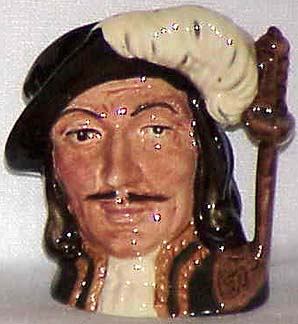
The Accolade of Christian Knighthood

IF YOU READ THROUGH THE LONG list of St Paul's mortifications (2 Cor 11), or "infirmities", as he calls them, by which he vindicates his title to apostleship, you will find that whereas some of them are due to persecution from without, many of them refer merely to the incidental discomforts - cold, sleeplessness, shipwreck, and so on - which were incidental to a busy life like his ... "Whom the Lord loves, he chastises," he tells us and again, "If you are without chastisement, whereof all are partakers, then are you no true sons." In a word, suffering of some kind is the badge of the Christian profession, the accolade of the Christian knighthood (emphasis added). Suffering, to be sure, is the common lot of mortality, but Christians - I mean good Christians - will suffer more than their neighbours, because they are less indulgent to themselves, less sparing of their personal comfort, more sensitive to the needs of others. And they have, too, a warfare to fight against spiritual enemies, all the more painful because they are really in earnest about it, because they really care.

As chastised, and not killed, Servants of Christ, we must embrace, with sublime confidence, his assurance that not one hair of our heads can fall to the ground without the will of our heavenly Father (Mtt 19,30). The providence that watched over our Lord in his helpless infancy, the providence which he trusted so utterly amidst the dangers which surrounded him, has watched over his Church all through the ages, will watch over us when all hope seems lost and all prayers unanswered. The eternal God is our refuge, and underneath are the everlasting arms.

- Ronald A. Knox
Sunday, August 22, 2010

The Chivalrous Work of Prayer

Chesterton reminds us that the age-old principle of chivalry demands the knight fight not because he hates what is in front of him, but because he loves what is behind him. I repeatedly invite persons who love our Lord's holy Catholic Church, who pray for the renewal of Christendom, for our Holy Father, Benedict XVI - the 265th pontiff since St. Peter - and for the restoration of families, to join the chivalric order known as Corpus Christianum.

Yet unlike the ancient monastic practicing a balance of ora et labora, of these two - praying and fighting - I would say that the proportion in chivalry is undoubtedly 99.99% of the former and 0.01% of the latter.** Indeed, of the two, the practice of prayer is the absolute requisite for any kind of warfare, spiritual or otherwise.

Many do not know that Don John of Austria went to the Battle of Lepanto with a likeness of Our Lady of Guadalupe affixed to the wall of his quarters. That is a good practice for all of a knightly bent.

If you do decide to pursue membership in Corpus Christianum, I strongly suggest you begin a sustained practice of what is called Acta Militum, which is found at the website under Frequently Asked Questions. It will steer a course of constant prayer through out your month.

**That is, of course, unless you consider the inalterable fact that most our battles are fought in our own heart and soul; then the ratio becomes again 50:50.

Rome Before the Brits - Chesterton

BRITAIN WAS DIRECTLY ROMAN for fully four hundred years; longer than she has been Protestant, and very much longer than she has been industrial ... Britons were not originally proud of being Britons; but they were proud of being Romans ... Rome itself obviously could not rule the world, any more than Rutland. I mean it could not rule the other races as the Spartans ruled the Helots ... A machine so huge had to be human; it had to have a handle that fitted any man's hand. The Roman Empire necessarily became less Roman as it became more of an Empire; until not very long after Rome gave conquerors to Britain, Britain was giving emperors to Rome. Out of Britain, as the Britons boasted, came at length the great Empress Helena, who was the mother of Constantine. And it was Constantine, as all men know, who first nailed up that proclamation which all after generations have in truth been struggling either to protect or to tear down.

- G. K. Chesterton, A Short History of England

Saturday, August 21, 2010

Laetare - Joy in Sorrow

IN PROPORTION AS WE ARE GOOD Christians, the world will find us dull dogs, a little removed from its insensate pursuit of pleasures, a little obsessed with thoughts of death and of judgment, a little sceptical about its facile optimisms. But, again, in proportion as we are good Christians, this seriousness of character will not reflect itself in empty brooding on the wickedness of the world, will not make us morbid, self-centered, disillusioned. Rather, we shall find that Christian sorrow and Christian joy have their roots nearer together than we fancied; that the desire for God's will to be done perfectly in us and in all creatures, which is the Christian religion, bears a double fruit of sadness and of gladness. For so it must be, until our earthly Lent is over, and we rejoice for ever in the triumph of the eternal Easter-tide.

- Ronald A. Knox, Sermon preached at St. Charles Borromeo, London

MacDonald - Lilith

MR. RAVEN, OTHERWISE KNOWN as Adam, explains the inexplicable - the rationale for abortion - in George MacDonald's book, Lilith:

She fears, therefore hates her child ... The birth of children is in her eyes the death of their parents, and every new generation the enemy of the last.

Friday, August 20, 2010

Saint Bernard of Clairvaux

My spiritual director who died in June on the feast day of Sts Peter and Paul said that Saint Bernard of Clairvaux was the "air we breath" at Holy Cross Abbey, Berryville. I had asked him for a good place to begin reading St. Bernard. He sent me a voluminous letter with multiple photocopies, suggestions, one with the still intriguing title of The Family That Overtook Christ: the amazing story of the family of Bernard of Clairvaux.

We remember St. Bernard today as founder of a host of monasteries, the counselor to pontiffs, the figure whom Dante deemed worthy to escort his literary self into Paradise.

St. Bernard, son of knights, pray for us.

Thursday, August 19, 2010

Knox - Creed, Warfare, Loyalty, Romance

WE CANNOT BE CONTENT, like the average Protestant, with repeating to ourselves that certain spiritual ideas, certain avenues of approach towards the unseen, have been helpful to the Christians of other ages, and therefore may well have an abiding value for us too. We are committed to a creed. The Catholic religion is very much more than a creed; it is a life, a warfare, a loyalty, a romance. But it is a creed too; and the assertion of it involves us in an intellectual responsibility. Man's intellect is part of himself, and must be represented, consequently, in the scheme of his salvation ...

We shall get no credit for it; we shall still be called liars. But we can put up with that, when we remember that the eternal Wisdom of the Father came down to earth and was hailed as a deceiver (Mtt 17,63). If only they knew what it means to be a Catholic! God grant that they may come to know.

- Ronald A. Knox

Sunday, August 15, 2010

Invitation - Corpus Christianum

ON THIS GREAT FEAST DAY of the Assumption into Heaven of our Blessed Lady, I heartily invite you to prayerfully consider becoming a chivalric member of Corpus Christianum.

As our website declares, we are in full commitment to and agreement with the Magisterium of the holy Catholic Church:

CORPUS CHRISTIANUM is an international Private Association of the Faithful, open both to men and women, dedicated to praying for a renewal of Christendom.

Marian in character and guided by a Catholic chivalrous spirit, Corpus Christianum members pray daily for the following key points:

- The renewal, unity, and spread of Christendom

- The Supreme Pontiff and all priests/religious

- The protection of Christians around the world

- The restoration of the family

- The conversion of sinners and the sanctification of all people

I have found, personally, a vast deepening of my faith, hope, and charity by my daily commitment to the Acta Militum of Corpus Christianum.

May God bless you this blessed day of Our Lord's Resurrection and feast day of Our Lady.

Saturday, August 14, 2010

Knox - The Sanctus-Bell

I COULD TALK TO YOU for hours and hours about Church bells. Why are they christened, for example, like human beings? I don't mean they get the grace of faith, but there is a kind of christening ceremony, and they are given names. That's surely odd; nothing else in church gets a name given to it. You would think it very unusual if I started calling the alms-dish Percy. I suppose bells are so much mixed up with the important events of our lives; the wedding peals and the funeral chimes and so on, that the medieval people used to have a kind of friendly feeling for them; they were the public pets of the village. They were also supposed to drive the devil away, and I must say I know a lot of Church bells that would drive me away if I were the devil. But we really haven't time to talk about all that ...

It seems to me a very queer notion that at High Mass anyhow, when the priest has been singing his way so vigorously through the Preface, and the choir with great chords on the organ to get through the Sanctus, a tiny little bell in the sanctuary should have the effect of waking the faithful up. I should have thought that kind of faithful would have needed a siren. No, honestly, I think it's all part of this business about the holy Angels, and the priest having the feeling that he's just arrived at the door of Heaven and can look through the key-hole. Having arrived at the door, we ring the bell. And we don't do it to amuse ourselves; we do it to show the holy Angels that we are there. "Please say that Mary Jane has come to call" -- that is the point of the Sanctus-bell.

- Ronald Knox, The Mass in Slow Motion

The Bleak Shall Inherit the Earth?

I see that our commander-in-chief has personally endorsed the building a mosque at Ground Zero.

It just goes to show that anyone is capable of using logic to argue his way into an incredibly bad idea.