Friday, September 10, 2010

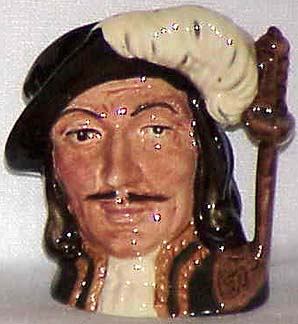
Invitation to Chivalry

Prayerfully consider joining Corpus Christianum, a growing, international association of men and women devoted to the practice of Marian chivalry, praying daily and diligently for:

- The renewal, unity, and spread of Christendom

- The Supreme Pontiff and all priests/religious

- The protection of Christians around the world

- The restoration of the family

- The conversion of sinners and the sanctification of all people

There is no monetary cost or subscription involved in joining Corpus Christianum (members of all ethnic and economic backgrounds are welcome), but it will, I assure you, be the finest offering of yourself, your soul and body, to God's Kingdom you can make. Pro Christo et Ecclesia.

Wednesday, September 8, 2010

Nativity of the Blessed Virgin Mary

Nativity of the Blessed Virgin Mary (1305) - Giotto

Dom Bosco - Relics Touring

The relics of Saint John Bosco will be visiting the United States and Canada very soon. Read where you may be able to venerate the great saint's remains here. And, if you don't know of his famous vision of the trials of Mother Church and the Holy Father, go here.

Tuesday, September 7, 2010

Raphael Tapestries, 'Cartoons'

From ZENIT:
Four of the tapestries Raphael designed for the Sistine Chapel will go on display this week alongside the drawings that were the models for the weavings.

The Victoria and Albert Museum (V&A) announced the display, to begin Wednesday and run through mid-October. The drawings (called "cartoons") for the tapestries have been on display at the V&A since 1865 but this will be the first time that the cartoons and tapestries have been displayed together -- something Raphael himself never witnessed.

The tapestries were commissioned in 1515; Raphael was asked to make drawings of Sts. Peter and Paul to complete the Sistine Chapel but in a medium quite unlike Michelangelo's.

The cartoons are the same size as the final project (more than 11 feet by 17 feet) and are mirror images of the tapestries, since they were woven from the back .. MORE>>

Sunday, September 5, 2010

Rossetti PRB

Lady of the Holy Grail - Rossetti

In a Fallen World - Knox

WHAT ST. PAUL WOULD TELL us, I think, is that all this suffering is beastly, to be sure; but there is nothing surprising about it, nothing unexpected about it. It all fits in, you see, with the conditions of our life here, because we live in a fallen world.

"We ourselves, although we have already begun to reap our spiritual harvest" - although, that is, we have eternal life already abiding in us through our baptism - "we ourselves groan in our hearts, waiting for that adoption which is the ransoming of our bodies from slavery." We look forward to heaven not merely as a place in which our souls will be happy, but as a place in which our bodies, mysteriously restored to us, will share those conditions of happiness. Man, yes, if you like, man is a misfit, in this imperfect world which is all the world we know at present. Man so infinitely great, whose thought can read the secrets of nature, can sweep the heavens in their immensity, and look beyond them in thought, as he sees in them the hand of the God who made them; man so infinitely great, harnessing the forces of nature and taming the beasts to his will; man with all his splendid works of art, his exuberant fancy, his aspiration towards holiness, his capacity for receiving God. And man, at the same time, so infinitely little. Man, always making resolutions which he doesn't keep, always being blinded by prejudices and aversions which he can't account for; man looking back on his own conduct and knowing himself mean, and selfish, and degraded; there is no littleness like his. All you can say of him, then, is that he, too, is a misfit ... He gets bored, for example - the dumb animals don't get bored ... But man must be always amusing himself, distracting himself; he can't bear to be left alone with his own thoughts. Why's that? Because he is a misfit; he was born for a nobler world than this transitory world, and he lives here in exile ...

St. Paul would tell us that all the sufferings people are having to undergo, all the sufferings you and I may have to undergo, before the thing is finished, aren't really so very extraordinary; it's just the world, our fallen world, being true to form. Man is meant to lives, not in enjoyment of this world, but in hope of the next. All his efforts to settle down and make himself comfortable here defeat their own ends; all the civilization he is so proud of only results in horrible bloodthirsty affairs ... which do their best to turn us all into savages. You can't ever really feel at home in this world until you realize that you're an exile. You can't ever really make the best of this world until you begin to understand that it's only an out-of-date model which has got to be scrapped. That is how the saints have lived; that is how the saints have managed to alter the course of the world's history - by not minding much whether the course of the world's history was changed or not. St. Paul, for example, whose preaching changed the face of Europe; and all the time he was saying to himself, "Heaven! The adoption of the sons of God! It can't be far off now; thank goodness, it can't be far off now! The creaking machinery of this imperfect creation must surely run down at last."

- Ronald Knox

Friday, September 3, 2010

St Fiacre, Brooms and Weeds

Gardening, I was told in 'chemo class,' is a great way of thwarting the effects of chemotherapy. I made an appointment with my wife to run to our local northern Virginia gardening center of choice and purchased: two butterfly bushes, two lilacs, and two Scottish brooms. All now reside in my front yard which passes more as a perennial garden than a 'lawn' (the only grass doesn't belong and is weeded).

So, thanks to the estimable Daniel Mitsui for lauding good saint Fiacre. God bless and may your perennials long prosper to His glory.

Sunday, August 29, 2010

Knox - At the Altar and Tabernacle, Pt. 1

THE CHRISTIAN ALTAR, like the temple at Jerusalem, is the rallying-point of God's people. Here, as there, heaven touches earth, yet remains uncontaminated by its contact. Christ is not moved when the sacrament is moved, is not broken when the sacrament is broken; so close does he come to our experience of daily life, so remote does he remain from it. And one of the chief influences he exerts, one of the chief ends he attains, by that nearness of his, is to draw us, his children, closer together. It is the sacrament of peace, as Jerusalem was the city of peace; through it we are one in fellowship. We speak of Christians as united in a single communion, of one Christian body as being in communion with, or out of communion with, another; that is no accident, no abuse of language. The whole notion of Christian solidarity grows out of, and is centred in, the common participation of a common table. As the many grains of wheat are ground together into one loaf, as the many grapes are pressed together into one cup, so we, being many, are one in Christ. How could we be one with Christ, without becoming one in Christ?

That supernatural unity is still laid up for us, if we would only realize it, in the tabernacle. Christian people, however much separated by long distances of land or sea, meet together in full force, by a mystical reunion, whenever and wherever the break is broken, and the cup blessed. We do well to remember that notion in times like these ...

The Blessed Sacrament, the Jerusalem of our souls, stands apart from and above all the ebb and flow of world-politics, its citizenship a common fellowship between us and those who are estranged from us, those who at the moment are our enemies. Our friends yesterday, our friends tomorrow -- in the timeless existence to which that altar introduces us, they are our friends today.

- Ronald A. Knox

Saturday, August 28, 2010

Saturday Night - Rise and Come with Me

IN THE MYSTICAL INTERPRETATION of the (Canticle of Canticles), the voice of the beloved is understood of Christ speaking to the faithful soul ...

Arise (he says), make haste and come. Come away from the blind pursuit of creatures, from all the plans your busy brain evolves for your present and future pleasures, from the frivolous distractions it clings to. Come away from the pettiness and the meanness of your everyday life, from the grudges, the jealousies, the unhealed enmities that set your imagination throbbing. Come away from the cares and solicitudes about the morrow that seem so urgent, your heavy anxieties about the world's future and your own, so short either of them and so uncertain. Come away into the wilderness of prayer, where my love will follow you and my hand hold you; leave to live, with the innermost part of your soul, with all your secret aspirations, with all the centre of your hopes and cares, in that supernatural world which can be yours now, which must be yours hereafter.

- Ronald A. Knox

Friday, August 27, 2010

Apocrphyal Tolkien

Just a reminder: for those who have the luxury of leisure and can loll in front of their computers awhile, don't forget to watch both Born of Hope and The Hunt for Gollum. Both productions, while borrowing the northern air and gestalt of Peter Jackson's films, are done as acts of love and on extremely low budgets. They are apocryphal to J. R. R. Tolkien (some can argue Jackson's films are equally apocryphal), but "fill in the gaps," so to speak, of events that the producers, directors, and casts deem important enough to devote their time and energies. Enjoy.

St Monica

Saint Monica - Ary Schefer

Wednesday, August 25, 2010

Tolkien - BBC

For all who love J. R. R. Tolkien, this link has been making the rounds: an interview with Tollers from 1968 re-issued by the BBC. (Well I remember the bizarre kind of sound tracks chosen unnecessarily by the BBC to accompany the piece. Try your best to ignore such absurdity and wade through to the interview that begins just past three minutes.)

Tuesday, August 24, 2010

The Accolade of Christian Knighthood

IF YOU READ THROUGH THE LONG list of St Paul's mortifications (2 Cor 11), or "infirmities", as he calls them, by which he vindicates his title to apostleship, you will find that whereas some of them are due to persecution from without, many of them refer merely to the incidental discomforts - cold, sleeplessness, shipwreck, and so on - which were incidental to a busy life like his ... "Whom the Lord loves, he chastises," he tells us and again, "If you are without chastisement, whereof all are partakers, then are you no true sons." In a word, suffering of some kind is the badge of the Christian profession, the accolade of the Christian knighthood (emphasis added). Suffering, to be sure, is the common lot of mortality, but Christians - I mean good Christians - will suffer more than their neighbours, because they are less indulgent to themselves, less sparing of their personal comfort, more sensitive to the needs of others. And they have, too, a warfare to fight against spiritual enemies, all the more painful because they are really in earnest about it, because they really care.

As chastised, and not killed, Servants of Christ, we must embrace, with sublime confidence, his assurance that not one hair of our heads can fall to the ground without the will of our heavenly Father (Mtt 19,30). The providence that watched over our Lord in his helpless infancy, the providence which he trusted so utterly amidst the dangers which surrounded him, has watched over his Church all through the ages, will watch over us when all hope seems lost and all prayers unanswered. The eternal God is our refuge, and underneath are the everlasting arms.

- Ronald A. Knox

Sunday, August 22, 2010

The Chivalrous Work of Prayer

Chesterton reminds us that the age-old principle of chivalry demands the knight fight not because he hates what is in front of him, but because he loves what is behind him. I repeatedly invite persons who love our Lord's holy Catholic Church, who pray for the renewal of Christendom, for our Holy Father, Benedict XVI - the 265th pontiff since St. Peter - and for the restoration of families, to join the chivalric order known as Corpus Christianum.

Yet unlike the ancient monastic practicing a balance of ora et labora, of these two - praying and fighting - I would say that the proportion in chivalry is undoubtedly 99.99% of the former and 0.01% of the latter.** Indeed, of the two, the practice of prayer is the absolute requisite for any kind of warfare, spiritual or otherwise.

Many do not know that Don John of Austria went to the Battle of Lepanto with a likeness of Our Lady of Guadalupe affixed to the wall of his quarters. That is a good practice for all of a knightly bent.

If you do decide to pursue membership in Corpus Christianum, I strongly suggest you begin a sustained practice of what is called Acta Militum, which is found at the website under Frequently Asked Questions. It will steer a course of constant prayer through out your month.

**That is, of course, unless you consider the inalterable fact that most our battles are fought in our own heart and soul; then the ratio becomes again 50:50.

Rome Before the Brits - Chesterton

BRITAIN WAS DIRECTLY ROMAN for fully four hundred years; longer than she has been Protestant, and very much longer than she has been industrial ... Britons were not originally proud of being Britons; but they were proud of being Romans ... Rome itself obviously could not rule the world, any more than Rutland. I mean it could not rule the other races as the Spartans ruled the Helots ... A machine so huge had to be human; it had to have a handle that fitted any man's hand. The Roman Empire necessarily became less Roman as it became more of an Empire; until not very long after Rome gave conquerors to Britain, Britain was giving emperors to Rome. Out of Britain, as the Britons boasted, came at length the great Empress Helena, who was the mother of Constantine. And it was Constantine, as all men know, who first nailed up that proclamation which all after generations have in truth been struggling either to protect or to tear down.

- G. K. Chesterton, A Short History of England